
TÜKENDİ
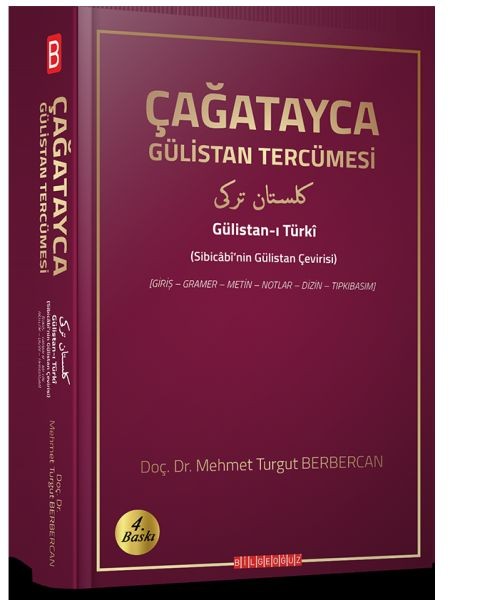
Çağatayca Gülistan Tercümesi
60,00 TL
| SKU | 9786052019283 |
|---|---|
| Yazar | Mehmet Turgut Berbercan |
| Yayınevi | Bilgeoğuz Yayınları |
Sa’dî’nin meshur GÜLISTAN adli eseri M. 1397-1398 yilinda, Timur’un torunu veliaht Muhammed Sultan’a ithafen, Sibicâbî mahlasli bir edip tarafindan adaptasyon metodu kullanilarak Farsçadan Klasik Öncesi Çagataycaya tercüme edilmistir. Kronolojik olarak Türk edebiyatindaki ikinci Gülistan tercümesi olan Sibicâbî’nin Gülistan Çevirisi veya en bilinen adiyla “Çagatayca Gülistan Tercümesi(Gülistân-i Türkî)”, Mehmet Turgut Berbercan tarafindan “Çagatayca Gülistan Tercümesi” basligiyla Istanbul Üniversitesi’nde, 2011 yilinin agustos ayinda Doktora Tezi olarak bilim dünyasina sunulmustur. 2011 yilina ait bu çalisma, eserin dünyada ve Türkiye'de yapilmis ilk nesridir ve eser üzerindeki ilk kapsamli bilimsel çalismadir. Eserin tamaminin çeviriyazisini, gramerini, dizinli sözlügünü ve tipkibasimini içermektedir. Ayrica kitapta, esere ait filolojik notlar ile eserin Türk dili tarihi içindeki önemli yerini ortaya koyan tespitler ve açiklamalar bulunmaktadir. 2011'de tez olarak iki cilt halinde sunulan eser, 2012’de kitap olarak nesredilmis ve eserin bugüne kadar birçok baskisi yapilmistir. Kitap, gerek ulusal kütüphanelerin gerekse dünya kütüphanelerinin kataloglarina girerek hem yurtiçinde hem de yurtdisindaki uluslararasi platformlarda Mehmet Turgut Berbercan'in nesriyle tanitilarak duyurulmustur. Bazi kisi yahut kisilerin Mehmet Turgut Berbercan'a ait ilk yayindan yararlanarak ama bilimsel yolla atif yapmadan (Doç. Dr. Mehmet T. Berbercan tarafindan yapilmis ilk çalismayi görmezden gelerek) yaptiklari tez çalismasi ve yayinlar mevcuttur. Yasal haklar mahfuzdur.
Harezm Türkçesinden Çagatay Türkçesine geçisi taniklayan, dil özellikleri bakimindan Harezm Türkçesinin son, Çagatay Türkçesinin ise ilk eseri olma özelligi tasiyan bu eserin, Türk dili arastirmalari açisindan, Türk dilinin gelisim seyrini aydinlatacak önemli bir noktada bulunmasi dolayisiyla bir an önce ele alinmasi gerekmekteydi. Böyle bir ideale hizmet etmek üzere sundugumuz bu çalisma ile Türk dili arastirmalarina katki saglamanin gururunu ve Türkolojinin kaynaklarina bir eser daha kazandirmanin mutlulugunu duymaktayiz.
A CHAGATAI VERSION OF GULISTAN (SIBICABI’S GULISTAN TRANSLATION)
« GULISTAN-I TURKI »
The book GULISTAN of famous Persian poet and writer Sa’di was translated into Pre-classical Chagatai Turkish from Persian in the years AC 1397-1398 by a translator and also a poet who had a pen-name called Sibicabi. This translation work of Sibicabi was called as Gulistan-i Turki (Turkish version of Persian Gulistan or Chagatai Translation of Gulistan). Chronologically second translation of the Gulistan in Turkish language and literature is this manuscript which has stylistically an adaptation character and different methodology. Thus, Gulistan-i Turki has philologically a significant and very sophisticated role in the perspective of the history of Turkish language. The written date of the work is in the advancement era of the Turkic languages after Mongol invasion in Central Asia. Especially language features (grammar and vocabulary) of the manuscript indicates a remarkable period of the Turkish language and a transition passage from the period of Hwarezm Turkish in 14th century to the Chagatai period at the beginning of 15th century. Consequently, the manuscript is the last work of Hwarezm Turkish and also accordingly considered as the first work of the Chagatai Turkish literature.
This book is based on the doctoral thesis completed by Mehmet Turgut Berbercan, in Istanbul University in 2011. In this book of Dr. Mehmet T. Berbercan (now Assoc. Prof. & chairman of the Old Turkic Philology section in Cankiri Karatekin University), the original text written in Arabic letters in nastaliq style is deciphered into Latin letters via transcription method. By means of the philological and linguistic data gained from the deciphered text, the language of the manuscript is studied from many aspects. Also its orthographical, phonological and morphological structure is elucidated in
Harezm Türkçesinden Çagatay Türkçesine geçisi taniklayan, dil özellikleri bakimindan Harezm Türkçesinin son, Çagatay Türkçesinin ise ilk eseri olma özelligi tasiyan bu eserin, Türk dili arastirmalari açisindan, Türk dilinin gelisim seyrini aydinlatacak önemli bir noktada bulunmasi dolayisiyla bir an önce ele alinmasi gerekmekteydi. Böyle bir ideale hizmet etmek üzere sundugumuz bu çalisma ile Türk dili arastirmalarina katki saglamanin gururunu ve Türkolojinin kaynaklarina bir eser daha kazandirmanin mutlulugunu duymaktayiz.
A CHAGATAI VERSION OF GULISTAN (SIBICABI’S GULISTAN TRANSLATION)
« GULISTAN-I TURKI »
The book GULISTAN of famous Persian poet and writer Sa’di was translated into Pre-classical Chagatai Turkish from Persian in the years AC 1397-1398 by a translator and also a poet who had a pen-name called Sibicabi. This translation work of Sibicabi was called as Gulistan-i Turki (Turkish version of Persian Gulistan or Chagatai Translation of Gulistan). Chronologically second translation of the Gulistan in Turkish language and literature is this manuscript which has stylistically an adaptation character and different methodology. Thus, Gulistan-i Turki has philologically a significant and very sophisticated role in the perspective of the history of Turkish language. The written date of the work is in the advancement era of the Turkic languages after Mongol invasion in Central Asia. Especially language features (grammar and vocabulary) of the manuscript indicates a remarkable period of the Turkish language and a transition passage from the period of Hwarezm Turkish in 14th century to the Chagatai period at the beginning of 15th century. Consequently, the manuscript is the last work of Hwarezm Turkish and also accordingly considered as the first work of the Chagatai Turkish literature.
This book is based on the doctoral thesis completed by Mehmet Turgut Berbercan, in Istanbul University in 2011. In this book of Dr. Mehmet T. Berbercan (now Assoc. Prof. & chairman of the Old Turkic Philology section in Cankiri Karatekin University), the original text written in Arabic letters in nastaliq style is deciphered into Latin letters via transcription method. By means of the philological and linguistic data gained from the deciphered text, the language of the manuscript is studied from many aspects. Also its orthographical, phonological and morphological structure is elucidated in